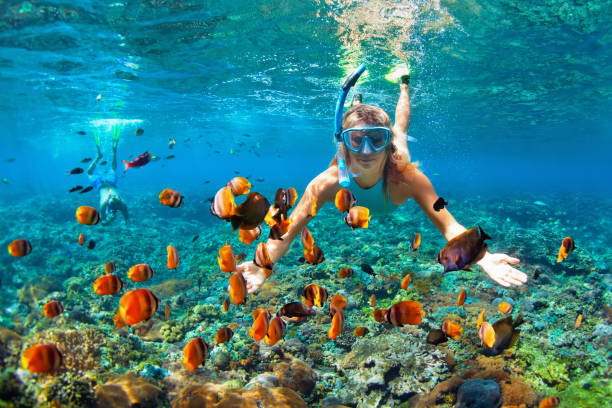

Visitors flock to the Emerald Coast expecting Caribbean-level water clarity every hour of the day, but Destin’s waters are far more dynamic than a standard resort lagoon. On the same afternoon, underwater visibility can swing from crystalline emerald depths spanning 30 feet to murky, tea-stained runoff where you can barely see your own fins.
The secret comes down to three natural forces: tides, wind, and sun angle. Knowing how they interact is the difference between an unforgettable encounter with sea turtles and a frustrating swim through stirred-up sand.
- The Golden Rule: High Slack Tide
If you remember only one rule for snorkeling in Destin, make it this: always target high slack tide.
Destin sits on the East Pass, the narrow opening connecting Choctawhatchee Bay with the open Gulf of Mexico. When the tide falls (an outgoing or ebb tide), millions of gallons of tannin-heavy, dark freshwater from interior rivers and bayous flush out into the pass and over the rock jetties. Visibility collapses, currents pick up speed, and bottom sediment gets churned into the water column.
When the tide rises (an incoming or flood tide), clean, salty, emerald-tinted water from the deep Gulf surges into the inlet.
The prime window opens roughly one hour before peak high tide and lasts until about an hour after. During this “slack water” phase, the inward rush of water pauses before reversing. Water clarity is at its absolute maximum, and currents are at their weakest, making it safe and effortless to float.
- Early Morning: Calm Winds and Unchurned Water
While tides dictate water clarity, the clock dictates surface conditions.
Early morning departuresbetween 8:00 AM and 11:00 AMconsistently offer the best overall experience:
- Glassy Surface Conditions: The Gulf Coast heat engine creates an afternoon onshore breeze as the inland sand heats up. Morning water is frequently mirror-flat, eliminating choppy swells that push water into your snorkel tube.
- Minimal Boat Traffic: Midday on the Emerald Coast brings heavy boat and jet ski traffic to Destin Harbor, Crab Island, and East Pass. Boat wakes stir up sandy bottoms and push marine life deeper into rock shelters. Early morning lets you explore before the fleet wakes up the waterways.
- Active Marine Life: Fish, rays, and dolphins actively feed during the early hours before recreational watercraft fill the pass.
- Midday Sun: The Light Factor
While mornings offer calmer seas, midday sunlight provides the best illumination. Between 11:00 AM and 2:00 PM, the sun sits directly overhead. At this angle, light penetrates straight down into the water column rather than bouncing off the surface. If high slack tide happens to align with midday, you get an exceptional visual display: sunbeams cutting down to the seabed, vivid yellow-and-black stripes on spadefish, and distinct shadows cast by stingrays skimming along the bottom.
However, if high tide does not fall at midday, the early morning window remains the safer bet for smooth conditions and comfortable swimming.
- Why Guided Tours Remove the Guesswork
Tracking tide tables can be tricky for vacationers. Florida Panhandle tides are diurnal (mostly one high and one low tide per day) and shift forward roughly 50 minutes each day. A peak high tide at 9:00 AM on Monday will not peak until late morning or afternoon later in the week.
This is why booking with a local boat outfitter like Flipper’s Adventures pays off. Local captains consult real-time tide charts, wind reports, and buoy data daily. They adjust departure times and drop zones to guarantee you hit the calmest, clearest pocket of water available, steering your crew straight to where marine life is gathering.