
High school is a critical period in a young person’s life. It is a time when students begin exploring their interests, identifying strengths, and considering future education and career options. While these opportunities can be exciting, they can also feel overwhelming. Many students face uncertainty about what comes next after graduation and how to prepare for adulthood successfully.
A well-designed youth pathways program helps bridge the gap between school and future opportunities by providing guidance, practical experiences, and skill development. These programs are designed to help students gain confidence, explore career pathways, and make informed decisions about their future.
Many schools are increasingly incorporating initiatives similar to school wellbeing programs because they recognise that academic success and personal development are closely connected. By supporting both educational and emotional growth, these programs help students become more resilient, motivated, and prepared for life beyond the classroom.
What Is a Youth Pathways Program?
A youth pathways program is a structured initiative designed to help high school students prepare for future education, employment, and personal growth.
These programs often combine classroom learning with practical experiences that expose students to different industries, career opportunities, and life skills. The goal is not simply to help students choose a career but to equip them with the tools needed to navigate an ever-changing world.
Programs may include:
- Career exploration activities
- Leadership development
- Mentorship opportunities
- Workplace experiences
- Goal-setting workshops
- Personal development training
- Community engagement projects
Each program may differ in structure, but most share a common objective: helping young people transition confidently into adulthood.
Exploring Career Possibilities
One of the most valuable aspects of youth programs is career exploration.
Many students have limited exposure to the wide variety of careers available today. These programs introduce participants to industries and professions they may not have previously considered.
Students often have opportunities to:
- Meet industry professionals
- Attend career presentations
- Visit workplaces
- Participate in job-shadowing experiences
- Learn about educational requirements for various careers
Exposure to different career paths helps students gain a better understanding of their interests and abilities.
For example, a student who initially plans to pursue one field may discover a passion for another after participating in a workplace visit or speaking with professionals in that industry.
These experiences encourage informed decision-making rather than relying solely on assumptions or limited information.
Developing Essential Life Skills
Academic knowledge is important, but success in higher education and employment often depends on additional skills.
Pathways programs for youth frequently focus on developing transferable life skills such as:
- Communication
- Problem-solving
- Teamwork
- Time management
- Critical thinking
- Adaptability
- Professional behaviour
These skills are valuable regardless of the career path a student ultimately chooses.
Workshops and interactive activities often allow students to practice these competencies in realistic situations. Learning how to communicate effectively, manage responsibilities, and work collaboratively can improve confidence in both educational and professional environments.
Many employers consistently identify these soft skills as essential qualities in future employees.
Building Confidence and Self-Awareness
High school students are still developing their sense of identity and personal direction.
These programs help participants gain greater self-awareness by encouraging them to reflect on their strengths, interests, values, and goals.
Activities may include:
- Personality assessments
- Strengths identification exercises
- Goal-setting sessions
- Leadership challenges
- Reflection activities
As students gain a better understanding of themselves, they often become more confident in their ability to make decisions about their future.
One student who participated in a pathways initiative shared that before joining the program, they felt uncertain about their abilities and career options. Through mentorship and hands-on experiences, they discovered strengths they had never recognised, ultimately pursuing a field they had not previously considered.
Stories like this demonstrate how self-discovery can influence future success.
The Role of Mentorship
Mentorship is often a key component of successful pathways programs.
Mentors provide guidance, encouragement, and real-world perspectives that help students navigate important decisions. These relationships can be especially valuable during periods of uncertainty or transition.
Mentors may assist students by:
- Sharing career insights
- Offering practical advice
- Providing encouragement
- Helping set goals
- Discussing challenges and opportunities
The opportunity to learn directly from experienced professionals can make future possibilities feel more attainable and realistic.
Positive mentoring relationships often leave lasting impressions that extend well beyond the duration of the program itself.
Gaining Real-World Experience
One of the most exciting aspects of many pathways programs is the opportunity for experiential learning.
Students may participate in:
- Workplace visits
- Internships
- Volunteer projects
- Industry-based learning experiences
- Community service initiatives
These activities allow participants to apply classroom knowledge in real-world settings. Experiential learning helps students understand workplace expectations, develop professional skills, and build confidence in unfamiliar environments.
Exposure to professional settings often makes the transition from school to further education or employment less intimidating. It also provides valuable networking opportunities that may benefit students in the future.
Preparing for Further Education and Employment
These programs often include guidance related to post-secondary education and career planning.
Students may receive support with:
- Career goal development
- Resume preparation
- Interview skills
- College applications
- Scholarship opportunities
- Vocational training options
This practical support helps students feel more prepared for the next stage of their journey.
For many participants, these resources provide clarity and direction during a time when future decisions can feel overwhelming.
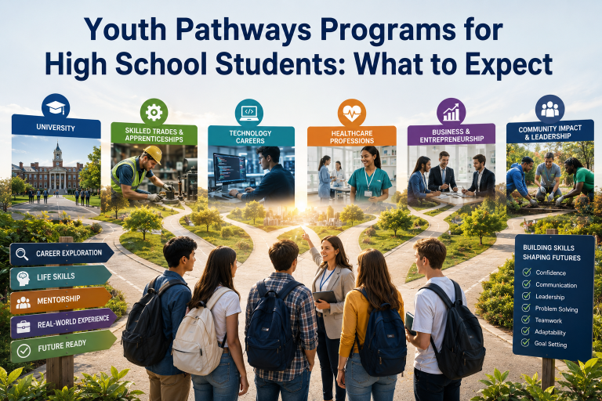
Programs frequently emphasise that success can take many forms, whether through university studies, vocational training, apprenticeships, entrepreneurship, or direct workforce entry.
Supporting Personal Growth and Wellbeing
Beyond academic and career preparation, these pathway programs often contribute to overall wellbeing. Students who feel supported, connected, and purposeful are more likely to thrive both personally and academically.
Participation can foster:
- Increased resilience
- Improved self-esteem
- Greater motivation
- Stronger social connections
- Enhanced sense of purpose
The combination of personal development and future planning creates a holistic approach to youth support.
By addressing emotional, social, and practical needs, these programs help students develop into confident and capable young adults.
Conclusion
Youth pathways programs offer far more than career guidance. They provide high school students with opportunities to explore future possibilities, develop essential life skills, gain real-world experience, build confidence, and establish meaningful connections with mentors and professionals.
Through a combination of education, personal development, and practical learning, these programs help young people navigate important transitions with greater clarity and confidence. They encourage students to discover their strengths, explore their interests, and take ownership of their future goals.
As the demands of education and employment continue to evolve, these programs play an increasingly important role in preparing students for success. For high school students seeking direction, growth, and opportunity, participation can be a transformative experience that extends far beyond the classroom.